Micromosaic
Roman micromosaic (or micro mosaic) is a meticulous mosaic technique that uses tiny Venetian glass tiles (tesserae), often under 1mm wide. Set in slow-drying traditional stucco, these hand-spun glass threads form intricate, durable, and highly collectible miniature artworks.
Roman micromosaic is a form of mosaic characterized by the use of very small tesserae, even less than a millimeter wide, made of smalti, a special Venetian glass paste. When smalti come into contact with fire, they melt. Once molten, this glass paste is pulled into thin threads (known as filati) which are then cut to create the microscopic tesserae. These microscopic tiles are then set into a special adhesive known as micromosaic stucco (or putty), a slow-drying putty made from linseed oil and powdered slaked lime/marble.
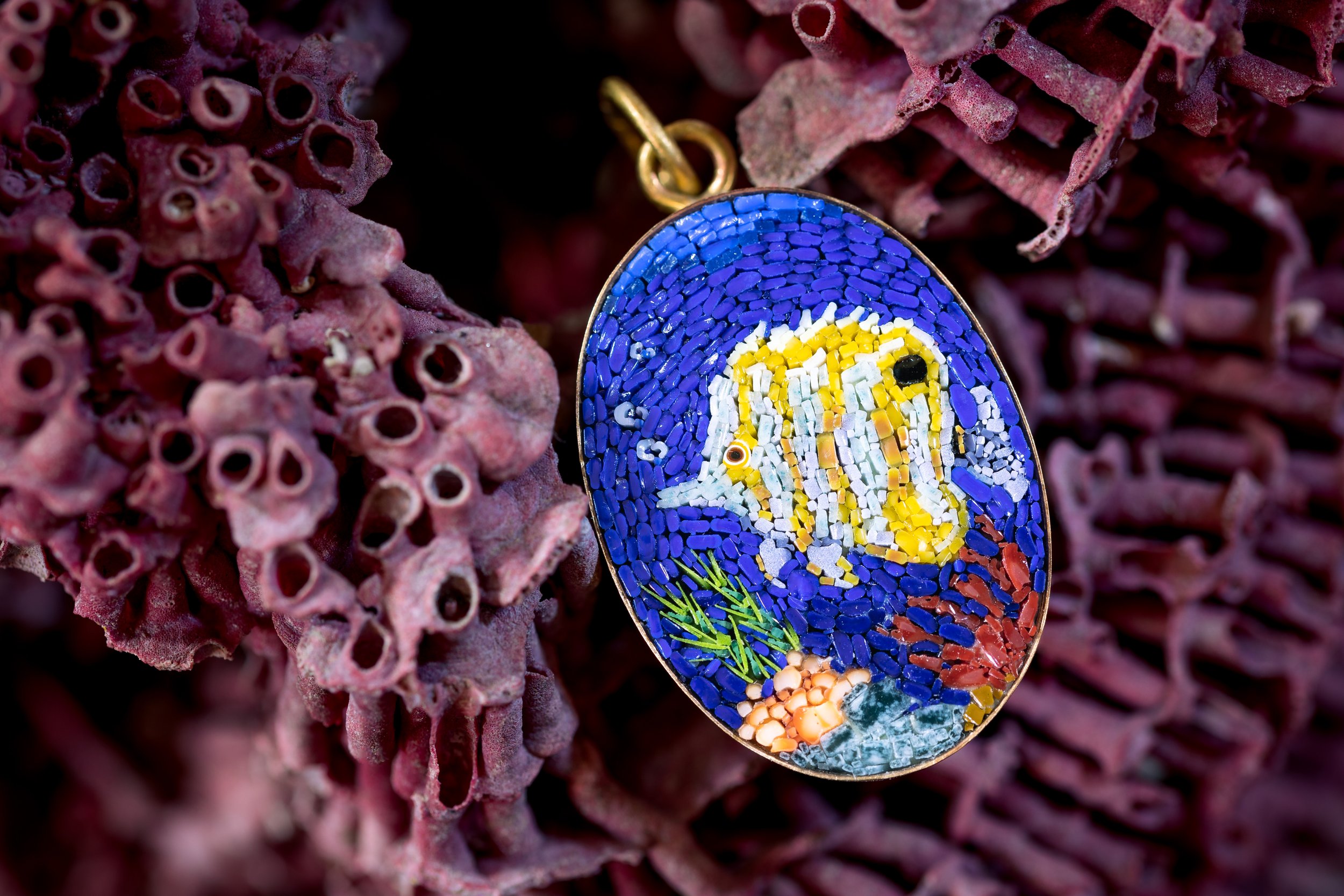
Micromosaic was long thought to be a late-18th-century invention, developed in Rome around the 1770s at the Vatican mosaic workshop by Cesare Aguatti and Giacomo Raffaelli. Recent research has pushed its origin back to early-1600s Rome with a Calandra "Holy Family" signed and dated 1622 as one of the earliest surviving examples. For centuries, micromosaic has been jealously guarded by a few craftsmen.
Do you want to learn micromosaic?
I approached the art of micromosaic because it shares the same materials of enameling on metal. Micromosaic made me fall in love due to the calm it transmits during the crafting process.
My artistic background makes me prefer contemporary designs characterized by bright colors over classic subjects.
Discover micromosaics by Rebecca D. Enamel


-
The main difference is the size and material. Standard mosaics use stone or glass tiles bigger than 1 mm. Roman micromosaic uses spun enamel threads (filati) to create microscopic tesserae use to create miniature mosaics. The tesserae can be less than one millimeter in size, making the final image look like a painting.
-
When created correctly with the proper stucco, micro mosaic jewels are surprisingly durable. However, like all jewelry, they should be treated with care and kept away from harsh chemicals. Learn more in Taking care of micromosaic jewelry.
-
Micromosaic stucco (often referred to as micromosaic putty, or Roman stucco) is the traditional, specialized adhesive used to bind and hold the tiny glass tesserae in a Roman micromosaic. Unlike standard mosaics that use wet cement, or modern crafts that use synthetic glues, Roman micromosaic relies on this unique, slow-drying paste.
-
Authentic Roman stucco is made using a recipe that dates back to the Vatican workshops of the 18th century. Its primary ingredients are linseed oil, and slaked lime. When mixed correctly, these ingredients form a dense, dough-like putty.
Creating authentic micromosaic stucco is a complex craft in itself. The materials have to be combined in a precise way to achieve a smooth, dough-like consistency. Furthermore, once the putty is initially mixed, it cannot be used immediately. The stucco requires a careful seasoning process that lasts several months. This months-long aging period enables chemical reactions that develop the stucco’s slow-drying properties and the perfect level of tackiness needed to hold the microscopic enamel threads (filati) firmly in place for centuries.
If you want to learn how to prepare professional Roman stucco yourself, check out my Micromosaic Book. If instead you prefer to use ready-made stucco, I have it available in my shop or on Hobbyland.
-
Creating a high-quality micromosaic involves placing hundreds, or even thousands, of microscopic tesserae. This process can take days or weeks. Modern glues and epoxies dry far too quickly. Traditional linseed oil stucco is designed to be extremely slow-drying. It remains soft and workable for days, allowing the artist the necessary time to place, adjust, and pack the tesserae tightly together. Traditional stucco is guaranteed to hold tiles in place for centuries.
-
For those who want to learn this ancient art, I offer professional micro mosaic supplies in my online shop. You can find authentic micromosaic putty (stucco) and spun enamel filati, in my complete micromosaic kits designed for beginners to start their first project at home. If you prefer to buy a small quantity of stucco without filati, find it on Hobbyland.
-
Because it is based on linseed oil, the stucco (or putty) cures through oxidation, rather than "drying" by evaporation. It remains workable on the surface for several days. After the mosaic is finished, it will feel firm within a few days, but the stucco will continue to harden over several weeks until it becomes incredibly durable and hard as stone. As such, after you create a micromosaic, it will take three-to-four weeks for the tesserae to be firmly set in place, and the micromosaic can be safely worn or sold.